
Our Story
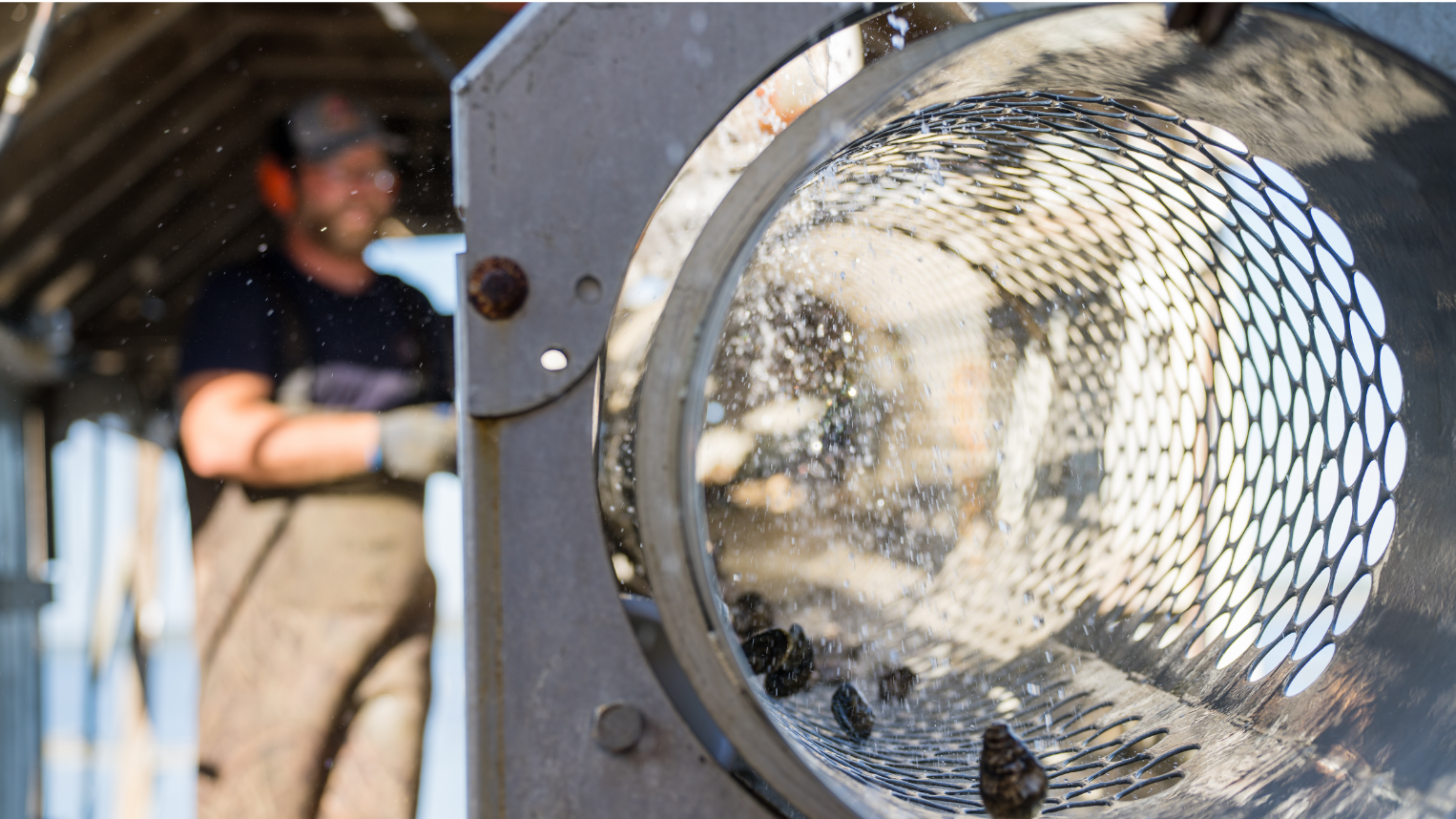
Fallen Pine takes its name from a pine tree that fell along the shoreline in the wake of Hurricane Isaias. The tree is still there today, its massive trunk bracing the bank against erosion, doing quiet work that nobody planned for. You don’t reject what nature gives. You show up, pay attention, and do the work. One season, one bag, one oyster at a time.
-
Dan starts volunteering on the oyster farm. He personally delivers oysters up and down the bay to bars and restaurants.
Soundtrack: “Stormy Weather.” Hurricane Isaias gifted us the title for our debut–Fallen Pine. -
Dan obtains the lease.
FIELD NOTES: Boring sponge compromised the shells, turning a promising crop into a hard lesson. We named them Spongebob Oysters and got back to work. -
The era of optimism. By trial and error, Dan learns to navigate the autumn King Tides on the farm, while still personally delivering oysters to his customers.
Field Notes: The bay dealt us a dream season — great growth, stunning quality, few storms. We called them Fool's Paradise. -
The big die-off. Sudden unexpected Mortality Syndrome demolishes thousands upon thousands of Dan's crop.
Field Notes: The loss was devastating, but the oysters that made it through were extraordinary–proff that resilience has a flavor. We called them Iron Pearls. -
Dan increases storage capacity to offset losses and maintain tighter biosecurity on the crop. Fallen Pine partners with Maryland watermen — buying their oysters and sorting them to size; the Wild Pony name carries on, as it has for years.
Field Notes: Calamity cleaned the slate for a fresh start — we called them Neptune's Bounty. -
Dan wins shucking championships in Maryland, Delaware, and Baltimore City, coming in second in Philadelphia.
Field Notes: The oysters were easy to love that year — plump, fat, and worth the wait. But after a bitterly cold winter (Dan walked across a frozen bay to check on the oysters) we decided to christen them Siren's Frost.
MEET DAN,
THE OYSTER MAN
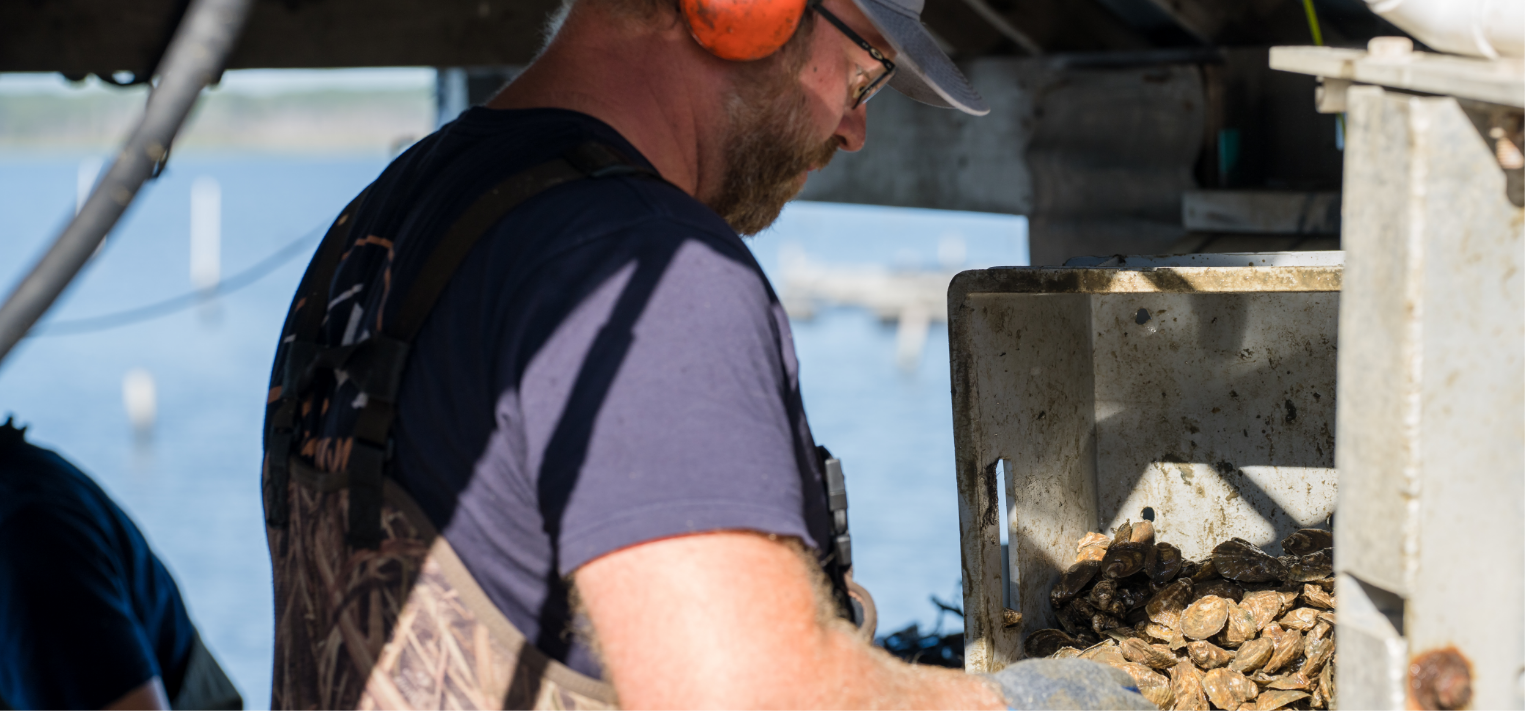
Dan Worrell comes from a family that worked the water — eight hours south, on Gwynn's Island, Virginia. While technically a transplant to the Chincoteague Bay region, Dan comes by this work honestly. Before founding Fallen Pine, he spent years with the Oyster Recovery Partnership, leading outreach on shell recycling efforts across the region — work that put him in direct contact with every side of the oyster world, from harvesters to chefs to scientists. By the time the fateful tree fell, Dan was already committed to healing the bay and bringing its bounty to hungry customers across the Mid-Atlantic.
In the late 1950s, developers set their sights on Assateague Island — platting lots, selling parcels, building roads along a barrier island that had no intention of staying put. Then in March
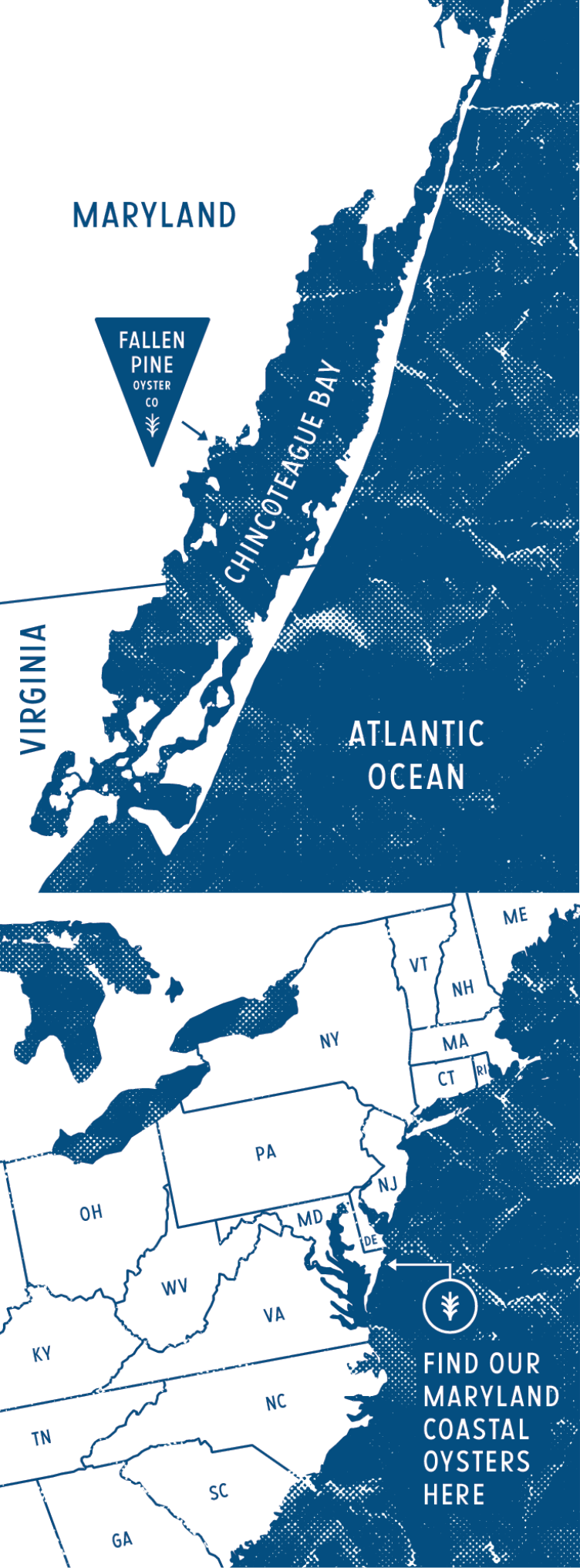
1962, the Ash Wednesday Storm demolished most of what they’d built. Three years later, President Kennedy’s vision for protected coastline became the Assateague Island National Seashore, and the developers moved on. What they left behind was one of the last undeveloped barrier island systems on the Atlantic coast — and behind it, sheltered from the Atlantic by eighteen miles of protected shoreline, the Chincoteague Bay.
The bay sits in a class of its own among Mid-Atlantic waters — high salinity, exceptional clarity, largely insulated from the agricultural runoff and urban development that degraded the
Chesapeake through the latter half of the twentieth century. When MSX and Dermo swept through the region’s oyster populations in the 1980s and 90s, collapsing wild harvests up and down the bay system, the coastal waters here fared differently. Scientists and aquaculture researchers took notice. The Virginia Institute of Marine Science used these waters as a benchmark environment for developing disease-resistant oyster strains — the high salinity and clean conditions made it the closest thing to a control group the region had. What the developers couldn’t build on, the oysters could.
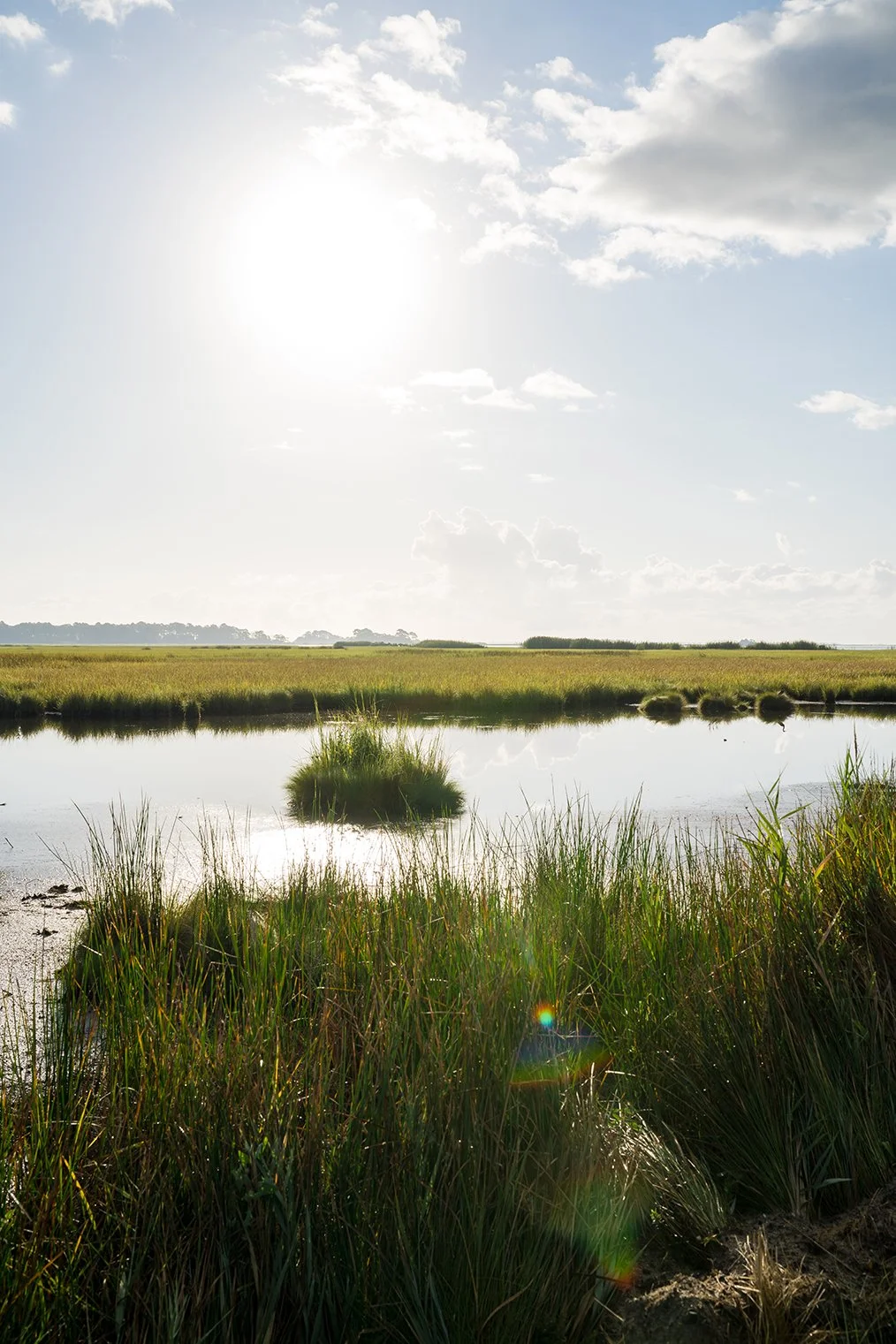
Conservation as Community
Farming oysters and restoring their ecosystem aren't separate pursuits — at Fallen Pine, they're the same thing. Every Salt Buoy filters up to fifty gallons of water a day, pulling nitrogen and phosphorus from a bay system that has spent the better part of a century trying to recover from industrial overharvest. Dan serves on Maryland's Aquaculture Coordinating Council, where watermen, scientists, and regulators work out the practical questions of how a responsible industry gets built.
He also serves on the board of the Assateague Coastal Trust, the organization that has monitored and advocated for the health of these coastal bays for over fifty years. Oysters don't grow from nothing — spat settle on the shells of previous generations, each new crop built on what came before. The conservation work is the same: seeding conditions for a responsible industry to take hold.